PartYard Defense
The quantum industry, although still in its early stages, holds tremendous potential for influencing technology and society. Quantum computing (QC), a widely discussed application, has the capacity to transform fields like machine learning (ML) and cryptography. By leveraging the principles of quantum mechanics, these computers promise to perform complex calculations at speeds beyond the reach of classical computers. It’s crucial to note that practical, widespread applications are still years away as the technology is in its developmental phase.
In 2023, the quantum technology market, encompassing quantum computing, attracted over $1 billion in new private capital through nearly 80 disclosed funding rounds, indicating a growing interest in the sector. The distribution of this investment underscores the complexity and diversity of the quantum technology market, with 48% going to quantum computing hardware components, 18% to quantum computers, and 22% to quantum sensing and imaging. Software development in quantum computing accounted for 6% of the investment.
Quantum Technology Applications
Quantum technology has the potential to drive innovation in various sectors, including computing, communications, and sensing. Quantum computing, using qubits, offers unparalleled processing power, surpassing traditional computing. This advancement has attracted interest from major companies and governments, as evidenced by Google’s Sycamore achieving “quantum supremacy” in 2019. However, challenges in hardware, error correction, and scalable systems persist. Despite these challenges, quantum computing is poised to drive significant industry transformations, demanding attention from businesses and professionals to harness its future impact.
The technology stack for quantum computing involves various layers, including end users accessing quantum devices through interfaces, Quantum Processing Units (QPUs) using multiple qubit implementations, and the overlap of quantum compilers and application interfaces. Control hardware and software are crucial for operating quantum devices. The stack also includes classical processing units (CPUs) and graphical processing units (GPUs) in addition to quantum processors.
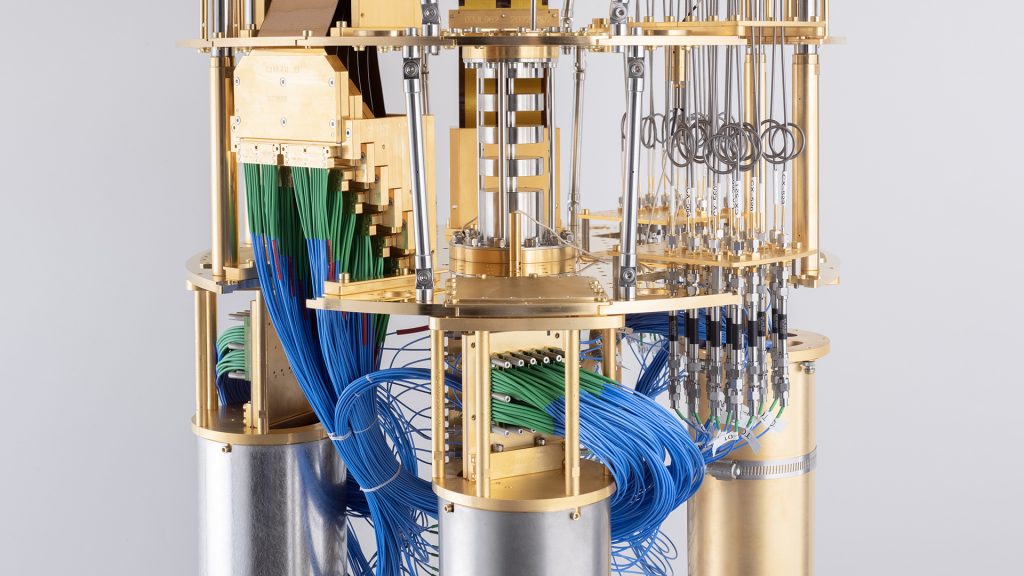
In quantum communication, concepts like quantum internet are emerging, potentially offering unprecedented levels of security using quantum cryptography to create unbreakable encryption. However, as with computing, practical realization of a quantum internet is a long-term goal, posing challenges to existing encryption methods. Quantum communications, leveraging quantum key distribution (QKD), could potentially enhance security. Meanwhile, quantum sensing could revolutionize fields like medical imaging and navigation. Despite their promise, these technologies are still under development and not yet ready for widespread clinical use.
Quantum’s Impact on Industries
Quantum technology, at the forefront of heavy engineering trends, promises to transform industries, from material development and natural resource exploration to enhancing security. Quantum computing, with its advanced simulation capabilities and optimization calculations, stands out in sectors like logistics, finance, and transportation. It also has implications for cybersecurity, with the potential to break and reinforce encryption methods. As industries and governments invest in exploring its applications, quantum technology’s role in future innovations is becoming increasingly significant.
Investment spans various hardware components, including dilution refrigerators, vacuum chambers, and coaxial cables. There’s significant investment in quantum software interfaces and Quantum Computing as a Service (QCaaS) offerings. Diverse qubit modalities received investment, with silicon (38%), photonics (27%), and neutral atoms (20%) leading the way, as of 2023. The private investment in Quantum Processing Units (QPUs) varied by modality, indicating the sector’s evolving nature.
Challenges and Limitations in the Quantum Industry
Quantum computing has made impressive progress but faces significant challenges before becoming widely practical. These include managing qubit decoherence, developing error correction techniques, scalability, hardware, and software advancements, interfacing with classical computers, establishing standards and protocols, increasing the trained workforce, and managing high costs. Despite these hurdles, ongoing research and investments suggest a gradual overcoming of these obstacles through small advancements and collaborative efforts across various sectors.
The investor landscape in the quantum industry is diverse, with a range of investors, including venture capitals, corporate VCs, and government offices. Some sector specialists and consistent investors are emerging, with a notable focus on early-stage ventures in deep physics and quantum technologies. Investment is not limited to private capital but also includes substantial government funding and corporate investment.
What Does the Future Hold for the Quantum Industry?
Most experts in the industry expect significant advancements in quantum computing within the next decade, particularly in achieving a quantum advantage over conventional computing for specific applications. However, there’s no clear consensus on which qubit technology will dominate. Gate-based quantum computers are seen as the most promising, but other types remain contenders. The development pace is expected to reach operational levels by the 2030s, yet widespread commercial availability remains uncertain. Factors like resource availability and geopolitical climate are crucial in shaping the future of quantum computing, with potential impacts on development and international cooperation. The quantum computing landscape is still evolving, with uncertainties around technology maturity and geopolitical stability.
Despite a decrease in private investment in 2023, returning to 2019/2020 levels, the sector remains robust. Government initiatives and funding are critical for the quantum technology sector, with over 33 governments having ongoing quantum technology initiatives. The future outlook suggests a continued interest in quantum technologies, with expectations of more technical and engineering breakthroughs, increased government procurement, and a possible evolution in venture capital focus towards deep tech.
Key Players in the Quantum Industry
In the quantum computing sector, key players are the big corporations which include IBM, Google Quantum AI, Microsoft, AWS, Alibaba Group, Atos Quantum (EVIDEN), Baidu, and Intel. Each entity brings unique contributions and advancements to the field:
- IBM offers cloud-based quantum computing services and is constructing a quantum data center in Germany.
- Google Quantum AI focuses on integrating quantum computing with machine learning, known for claiming quantum supremacy in 2019.
- Microsoft develops quantum software and hardware accessible via Azure, exploring quantum programming languages and qubit technologies.
- AWS (Amazon Braket) provides a platform for accessing various quantum computers through the cloud, facilitating research and software development.
- Alibaba Group has established a quantum computing laboratory in Shanghai, focusing on open-source initiatives and quantum algorithm development.
- Atos Quantum (EVIDEN) offers the Quantum Learning Machine, a system for simulating quantum systems, and is involved in quantum hybridization projects.
- Baidu runs the Baidu Quantum Computing Institute, developing quantum computing software and hardware solutions, including a quantum hardware-software integration solution called Liang Xi.
- Intel, known for semiconductor expertise, is working on ‘hot’ silicon spin-qubits and other quantum technologies, collaborating with academic and research institutions.
Each company is making progress in the field, yet the future of quantum computing remains in development with various technical and geopolitical factors influencing progress.
2023 has seen the quantum technology market receive significant investment, distributed across various sub-sectors with the majority going into full-stack quantum companies, drawing attention to the sector’s capital intensity. This investment trend reflects the complexity of the quantum computing technology stack, which includes various layers already mentioned. Funding, too, with its diverse investor landscape includes venture capitals, corporate VCs, and government offices, giving credence to the sector’s evolving nature and the importance of government initiatives in funding.
Call Us today: +351 265544370
Email: sales@partyardmilitary.com
NATO and Partner air forces have embarked on a new year with a significant milestone – the commencement of the first multinational Flying Course at the Tactical Leadership Programme (TLP) in Albacete, Spain. Over 30 jets from various nations are participating in this groundbreaking initiative, bringing together 650 individuals, including pilots, intelligence officers, and Ground-controlled interception (GCI) controllers.
Multinational Collaboration: The course features simulated flying operations involving 34 fighter jets, with contributions from nations such as the Czech Republic, France, Greece, Italy, Spain, and Switzerland. NATO and French Airborne Warning and Control System (AWACS) aircraft are overseeing the missions, ensuring a comprehensive and collaborative training experience.
Diverse Training Elements: The training program incorporates a range of elements to create a theatre-realistic environment. Spanish MQ-9 Predator unpiloted systems, Italian personnel recovery experts, and joint terminal attack controllers from the United States and Spain contribute to the diverse skill sets being honed. Additionally, helicopters and air extraction teams from Italy, Spain, and the United States are actively participating in the exercises.
State-of-the-Art Simulations: Lieutenant Colonel Luca C. Restelli, the lead of the flying course, highlighted the comprehensive preparatory training that includes laying theoretical and doctrinal foundations. Simulations are conducted in the Modern Air Combat Environment (MACE) simulator, providing participants with a dynamic and realistic virtual phase. The subsequent weeks focus on improving leadership, flying skills, and tactical interoperability.
Tactical Leadership Development: During synthetic and live missions, participants are tasked with developing the tactical leadership skills necessary to plan, brief, fly, and debrief fully integrated multinational formations. The course structure involves different crews leading others through all phases of missions, gradually increasing in complexity. The scenarios presented are frequently updated to incorporate modern warfare tactics and integrate new weapon systems.
Objectives and Strategies: Colonel Alberto Martínez Ruiz, Commandant of the TLP, underscored the program’s primary objective of enhancing the effectiveness of Allied and Partner air forces in tactical leadership and strategic initiatives. The TLP follows a five-pillar strategy, including the integration of 4th, 5th, and Xth Generation platforms, adopting the Agile Combat Employment concept, live-virtual-constructive training, a state-of-the-art Contested-Degraded Operations environment, and the introduction of Joint All Domain factors in challenging air scenarios.
The multinational Flying Course at the TLP in Albacete represents a significant step forward in fostering collaboration and enhancing the capabilities of NATO and Partner air forces. As participants engage in diverse and challenging scenarios, the program aims to cultivate tactical leadership skills and ensure readiness in the face of evolving global security challenges.
Call Us today: +351 265544370
Email: sales@partyardmilitary.com
Source: Defense Industry Europe
Safran Aircraft Engines and the national aerospace research agency of France, ONERA, have initiated initial wind tunnel tests using the ECOENGInE, a 1:5 scale prototype of the future Open Fan. These trials are taking place at ONERA’s wind tunnel facility in Modane, France. This innovative architecture, a critical component of the CFM RISE technology demonstration program, currently shows the most promise in terms of reducing the environmental impact of aviation. The goal of the Open Fan is to decrease fuel burn and CO2 emissions by 20%, with a potential increase to 80% when combined with SAFs or sustainable aviation fuels, for the next generation of single-aisle commercial jets by 2035.
In support of refining the aerodynamics and acoustics of the Open Fan, Safran Aircraft Engines and ONERA recently formalized a framework agreement for an ambitious testing plan spanning from 2024 to 2028. This plan builds upon previous experiments with the ECOENGInE.

Tests on the ECOENGInE, endorsed by the French Civil Aviation Authority (DGAC) as part of the CORAC plan, aim to showcase the aerodynamic and acoustic performance of the fan module by simulating real-world airspeeds in a wind tunnel and validating the design of the fan blades. These blades are crucial to the overall efficiency of the engine. The campaign involves over 200 hours of testing, followed by simulation tests with the engine mounted on a demonstrator plane wing section. For these assessments, Safran Aircraft Engines leverages the expertise of ONERA teams and utilizes the world’s largest sonic wind tunnel, the S1MA tunnel, with its unique dimensions of 8 meters across (over 26 ft) and high airflow speed. This facility plays a pivotal role in developing new propulsion systems for the next generation of aircraft.
Marie-José Martinez, Wind Tunnels Director for ONERA, emphasized ONERA’s role as scientific experts in aerospace and their commitment to reducing the environmental footprint of aviation. She expressed pride in the partnership with Safran, making ONERA’s outstanding facilities and renowned engineers available.
Pierre Cottenceau, VP Engineering and R&T for Safran Aircraft Engines, highlighted the significance of the wind tunnel tests in their Research & Technology roadmap. This roadmap aims to develop the technological foundations for the next generation of commercial jet engines, with the RISE program showcasing the benefits of an unshrouded engine architecture on the ground and in flight by the mid-decade.
Safran is actively coordinating the demonstration of the Clean Aviation OFELIA project (Open Fan for Environmental Low Impact of Aviation), engaging 26 European partners, including ONERA. Additionally, Safran is involved in various technological building blocks, including hybrid propulsion, aligned with the Open Fan architecture.
A comprehensive testing program is underway across Safran sites to advance the maturity of these technologies, essential for helping air transport achieve carbon neutrality by 2050. For instance, the Villaroche center in France has already completed ingestion tests on Open Fan blades and is currently constructing a new test stand facility. Operational in 2025, this facility with an 8-meter-wide (26 ft) chamber will conduct development and certification tests for the RISE program.
Call Us today: +351 265544370
Email: sales@partyardmilitary.com
Source: SAFRAN
NASA, in collaboration with aircraft manufacturer Lockheed Martin, has introduced the X-59, marking a significant milestone in the American space agency’s mission to make supersonic flights a common mode of travel. The X-59, shrouded in an air of mystery even in its name, has not disappointed.

This new, quiet supersonic jet is designed to minimize the sonic boom created when surpassing the speed of sound. Capable of flying at 1.4 times the speed of sound, its inaugural flight is scheduled for later this year.
The jet is the outcome of a joint project between NASA and Lockheed Martin with a simple yet ambitious goal: to revolutionize air travel by producing a new generation of commercial jets that can travel faster than the speed of sound.
It’s noteworthy that the X-59 represents the next generation of supersonic planes, succeeding the Tupolev TU-144 (inaugural flight on December 31, 1968) and the Concorde (inaugural flight on March 2, 1969).
X-59 Aiming to Tackle Sonic Boom Issue
Supersonic flight involves the ability to fly at speeds exceeding the speed of sound. The speed of sound varies with air density, but at sea level, it is approximately 1,224 kilometers per hour. If an aircraft flies slower than this, it is subsonic; if it flies faster, it becomes supersonic.

Aircraft breaking the sound barrier produce the famous sonic boom. However, this doesn’t occur precisely when an object breaks the sound barrier. The sonic boom, created by compressed shock waves, is a continuous sound that happens as long as the aircraft is traveling faster than the speed of sound. For onlookers on the ground, the boom is felt only when the pressure waves pass overhead. The sound can be quite disruptive, and the X-59 aims to address this disturbance.
The X-59‘s design appears straight out of a science fiction movie, measuring 30 meters in length and 9 meters in width. Its slender, tapered nose, occupying about one-third of the total length, is expected to significantly disrupt the shockwaves responsible for the sonic boom.
Due to its design and elongated nose, the pilot sits in the middle, making it challenging to obtain a proper front view from a window. To overcome this, high-resolution cameras feed a signal to 4K monitors in the cockpit as part of the “External Vision System.“
The Concorde was retired in 2003 after 27 years of service. Since then, we have been limited to subsonic flights and long-duration journeys. If the X-59’s test flights later this year prove successful, we may witness faster travel times around the world in the coming years.
Call Us today: +351 265544370
Email: sales@partyardmilitary.com
Armite’s LF-AS 328 Boeing Anti-Seize Compound has proven its worth in the aerospace industry for its ability to prevent seizing, galling, rust, and corrosion of threaded fasteners and metal components. It meets the stringent requirements of Boeing’s BMS3-28A specification, ensuring its performance and reliability in demanding applications.This versatile lubricant is particularly effective in high-temperature environments, withstanding temperatures up to 350°F. It is ideal for lubricating threaded parts in contact with aluminum and magnesium alloys, commonly used in aerospace structures and systems.
Armite’s Boeing Anti-Seize Compound offers a range of benefits that make it a valuable choice for a variety of industries. It:
Prevents seizing and galling: This compound forms a protective layer on metal surfaces, preventing them from bonding and causing damage during assembly or disassembly.
Reduces friction and torque: The lubricating properties of the compound minimize resistance between moving parts, reducing friction and torque requirements.
Extends component life: By preventing seizing and corrosion, this compound helps to extend the lifespan of threaded fasteners and other critical components.
Meets Boeing specifications: Armite is the only approved manufacturer of Boeing BMS3-28A Spec Anti-Seize Compound, ensuring its compatibility with Boeing standards.
Water-resistant and humidity-resistant: The compound can withstand water washout and high humidity environments, making it suitable for outdoor applications.
Armite’s Boeing Anti-Seize Compound finds applications across various industries, including:
Aerospace/aviation: As an anti-seize and lubricating compound for threaded fasteners and other metal components in aircraft engines, structures, and systems.
Military vehicles: Lubricating high-temperature components in exhaust systems, turbochargers, and other critical systems.
Electrical: Protecting metal surfaces and lubricating components in electrical equipment, such as communications and navigation systems.
Automotive: Extensively used in automotive, motorsport, and transportation industries for lubricating various components.
With its proven track record and wide range of applications, Armite’s LF-AS 328 Boeing Anti-Seize Compound has established itself as a reliable lubricant for the aerospace and other industries. Its ability to prevent seizing, reduce friction, and extend component life makes it an essential choice for demanding applications where reliability and performance are paramount.
Call Us today: +351 265544370
Email: sales@partyardmilitary.com
Humanity has long been fascinated by the concept of speed, and nowhere is this fascination more evident than in the world of aviation. For decades, engineers and designers have pushed the boundaries of technology to create aircraft that can travel faster and farther than ever before. And today, we’re taking a look at the 10 fastest jets in the world, as of 2024.
These awe-inspiring machines are not just marvels of engineering, but also testaments to human ingenuity and the pursuit of pushing the limits of what’s possible. From the F-22 Raptor to the cutting-edge NASA X-43, these jets represent the pinnacle of aviation technology.
So, buckle up and get ready for a high-speed adventure as we explore the 10 fastest jets in the world, 2024 edition.
10 – F-22 Raptor

The Lockheed Martin F-22 Raptor, a single-seat stealth fighter, is a formidable weapon with a top speed of Mach 2.25 and long-range cruising ability, carrying a plethora of missiles on board. Its stealth capabilities are so advanced that the F-22 is not allowed to be sold to any country other than the United States. However, despite its speed and stealth, it has been overshadowed and superseded by the slower but more versatile F-35 Lightning II fighter jet. Only 187 F-22s were produced before production ceased, making it a rare sight in the skies.
9 – MiG-29 Fulcrum

The MiG-29, a lightweight and agile Soviet fighter jet, was designed to rival the formidable F-15 Eagle during the Cold War. Capable of soaring over 1,500 kilometers on a single tank of fuel and even mid-air refueling, its incredible range and speed have made it a formidable weapon in aerial combat.
8 – F-14 Tomcat

The F-14 Tomcat, an American masterpiece of aviation, soared to stardom as the protagonist of the 1986 action film Top Gun. Its signature variable-sweep wings, dual-seat cockpit, and carrier-based operation left an indelible mark on the cinematic landscape. Capable of reaching a blistering top speed of Mach 2.34, the F-14 dominated the skies for over 30 years, cementing its place as one of the most recognizable and revered fighter jets in history.
7 – MiG-23 Flogger

The MiG-23, a Soviet-era masterpiece of aviation, stands out with its iconic variable-sweep wing design. This distinctive feature not only distinguishes the MiG-23 from its contemporaries but also enhances its agility and maneuverability, making it a formidable adversary in dogfights. Its impressive top speed of Mach 2.35 further bolsters its combat prowess by making it a challenging target to evade. This remarkable fighter jet, with over 5,000 units produced and still in service in several air forces, stands as a testament to Soviet engineering prowess and enduring legacy in the world of aviation.
6 – Sukhoi Su-27 Flanker

Renowned for its unmatched maneuverability and impressive flight capabilities, the Sukhoi Su-27 has defied expectations by remaining a staple in Russian air forces for over four decades. Its versatility and ability to handle a wide range of missions, including air-to-air combat, ground attack, and anti-ship warfare, have made it a formidable contender in various roles. With its remarkable climbing abilities and enduring presence, the Su-27 stands as a testament to Russia’s aviation prowess.
5 – F-15 Eagle

The F-15 Eagle, a stalwart of the skies for nearly five decades, remains a remarkably agile and swift aircraft, capable of reaching speeds of Mach 2.5. Its combination of a low weight and a large wing area enables it to execute sharp maneuvers without sacrificing momentum, making it a formidable dogfighter and a crowd-pleaser at airshows worldwide.
4 – MiG-31 Foxhound

Despite being one of the oldest jets still in service, the MiG-31 remains a formidable aerial platform. Its stable flight characteristics at both low and high altitudes compensate for its limited agility. Its fearsome armament, including long-range missiles, further enhances its capabilities. With a top speed of Mach 2.83, the MiG-31 is a testament to Soviet engineering prowess.
3 – MiG-25 Foxbat

The Mikoyan-Gurevich MiG-25, with its impressive speed and long service life, stands as a testament to Soviet aviation prowess. Despite its age, the MiG-25 remains one of the fastest jet fighters ever built, capable of reaching speeds of Mach 2.83.
The MiG-25’s impressive speed was initially limited due to engine concerns, but even with the speed restriction, it remains a remarkable aircraft. With a production run of nearly 1,200 units, the MiG-25 has proven to be a versatile and enduring fighter jet.
2 – Lockheed SR-71 Blackbird

The legendary SR-71 Blackbird, a Cold War reconnaissance aircraft known for its unmatched speed and altitude, holds the title of the second-fastest jet ever built. Officially retired in 1999, the Blackbird’s Mach 3.3 speed was so formidable that no missile could ever catch it. Its advanced design, introduced in 1966, allowed it to soar at unprecedented heights, reaching a record-breaking 26,000 meters in 1976. NASA continued to utilize the Blackbird for high-speed and high-altitude training until its final flight in 1999. Rumors suggest that its successor, the Lockheed SR-72, will make its grand debut in 2025, poised to continue the Blackbird’s legacy of aerial excellence.
1 – NASA X-43

NASA’s X-43 holds the title of the world’s fastest jet, reaching an astounding Mach 9.6, or 11,854 kilometers per hour, thanks to its revolutionary scramjet design. Only three of these groundbreaking aircraft were ever constructed, and one met an unfortunate demise during testing in 2001. The remaining two successfully soared through the skies for a remarkable 10 seconds before gliding for ten minutes and deliberately plunging into the ocean. Despite the unconventional method of being launched from a Boeing B-52, the X-43 remains an awe-inspiring feat of engineering and a testament to human ingenuity.
This data was originally published on https://www.sciencefocus.com/qanda/top-ten-fastest-jets-in-the-world: https://www.sciencefocus.com/qanda/top-ten-fastest-jets-in-the-world.
Call Us today: +351 265544370
Email: sales@partyardmilitary.com
In today’s interconnected world, the threat posed by unmanned aerial systems (UAS) is escalating, posing significant security concerns for businesses, organizations, and governments worldwide. Partyard, a leading provider of innovative security solutions, recognizes the growing sophistication of UAS threats and has taken steps to address this challenge by offering a comprehensive suite of counter-drone (C-UAS) solutions.
Partyard’s C-UAS portfolio encompasses a range of cutting-edge technologies designed to detect, track, and neutralize unauthorized drone intrusions. These solutions can be tailored to meet the specific needs of diverse environments, from critical infrastructure sites and military installations to large-scale public events and sensitive airspace.
Detecting and Tracking UAS Threats
At the heart of Partyard’s C-UAS approach lies a sophisticated detection and tracking system. This system employs a combination of radar, optical, and electronic sensors to identify and track UAS in real-time, providing valuable situational awareness and enabling proactive countermeasures.
Neutralizing Drone Threats
Once a UAS threat has been identified, Partyard’s C-UAS solutions can swiftly neutralize the threat using a variety of methods. These methods include RF (radio frequency) jamming, net deployment, and retrieval.
RF jamming disrupts the communication link between the UAS and its operator, effectively grounding the drone. Net deployment involves firing a net towards the UAS, entrapping it and bringing it to a safe standstill. Retrieve systems enable the collection and recovery of the UAS for further investigation.
Customizable Solutions for Diverse Environments
Partyard’s C-UAS solutions are designed to be highly customizable, allowing for tailored deployment to meet the specific requirements of each environment. Whether it’s a fixed installation at a critical infrastructure site or a mobile solution for temporary events, Partyard can provide the ideal C-UAS configuration.
Protecting Against Emerging UAS Threats
Partyard recognizes the ever-evolving nature of UAS threats and continuously invests in developing innovative C-UAS technologies to stay ahead of the curve. The company’s commitment to research and development ensures that its solutions remain effective against emerging UAS technologies and operational tactics.
Enhancing Security and Protecting Assets
Partyard’s comprehensive C-UAS portfolio provides a robust defense against unauthorized drone intrusions, safeguarding critical infrastructure, sensitive areas, and public safety. With its commitment to innovation and adaptability, Partyard is at the forefront of C-UAS technology, helping organizations and governments protect their assets and ensure the security of their airspace.
Call Us today: +351 265544370
Email: sales@partyardmilitary.com
#counterdrone #dronedefense #UASsecurity #cUAS #dronethreats #criticalinfrastructuresecurity #publicsafety #securitysolutions #PartYardMilitary #PartYard
Quantum repeaters are essential components for building quantum networks, which have the potential to revolutionize communication, computation, and sensing. Quantum repeaters can amplify and purify quantum signals, enabling them to travel long distances without losing their quantum properties.
In a new study, researchers at MIT have developed quantum repeaters using defects in diamond. These defects, known as nitrogen-vacancy (NV) centers, are tiny imperfections in the diamond lattice that can store and manipulate quantum information.
The MIT researchers’ quantum repeaters use NV centers to entangle photons, which are particles of light. Entanglement is a quantum phenomenon in which two or more particles become linked in such a way that they share the same fate. This means that measuring the state of one entangled particle instantly reveals the state of the others, even if they are separated by a large distance.
By using NV centers to entangle photons, the MIT researchers have been able to create a quantum repeater that can amplify and purify quantum signals with a fidelity of over 99%. This is a significant improvement over previous quantum repeaters, which have had fidelities of around 80%.
The MIT researchers’ quantum repeaters are a major step forward in the development of quantum networks. With further development, these repeaters could be used to build a global quantum network that would enable secure communication, ultra-fast computing, and precise measurements.
Here are some of the key points of the MIT research:
- The researchers used NV centers in diamond to entangle photons.
- The quantum repeaters they developed have a fidelity of over 99%.
- This is a significant improvement over previous quantum repeaters.
- The researchers’ quantum repeaters are a major step forward in the development of quantum networks.
Source:
- Quantum repeaters use defects in diamond to interconnect quantum systems: https://news.mit.edu/2023/quantum-repeaters-use-defects-diamond-interconnect-quantum-systems-0927
Call Us today: +351 265544370
Email: sales@partyardmilitary.com
The U.S. military is rapidly advancing its artificial intelligence (AI) capabilities, with plans to deploy thousands of autonomous vehicles by 2026, according to a new report by the Associate Press.
The increasing integration of AI into military operations is driven by the potential for these technologies to enhance battlefield awareness, improve decision-making, and increase operational efficiency. Autonomous vehicles, in particular, offer the promise of reducing human casualties and expanding the range of military missions.
The U.S. military has already utilized AI in various capacities, from piloting small surveillance drones in special operations to aiding Ukraine in its conflict with Russia. AI technologies are also being employed to track soldiers’ fitness, predict maintenance needs for Air Force planes, and monitor space activities.
The report notes that the U.S. military is not alone in its pursuit of AI-powered autonomous vehicles. China and Russia are also investing heavily in these technologies, with the goal of developing next-generation weapons systems.
The increasing use of AI in warfare raises ethical concerns about the potential for autonomous weapons to make life-or-death decisions without human intervention. However, proponents of AI argue that these technologies can actually make warfare more humane by reducing the risk of civilian casualties.
The debate over the use of AI in warfare is likely to continue as these technologies become increasingly sophisticated. The U.S. military’s plan to deploy thousands of autonomous vehicles by 2026 is a sign that AI is playing an increasingly important role in modern warfare.
Source: www.readwrite.com/us-military-advances-in-ai-thousands-of-autonomous-vehicles-by-2026/
Call Us today: +351 265544370
Email: sales@partyardmilitary.com
Lockheed Martin is continuously maturing F-35 pilot training to ensure that aviators are prepared to fly the world’s most advanced fighter jet. The company is employing three key strategies to enhance training effectiveness: immersive virtual training, adaptive learning, and data-driven insights.
Immersive Virtual Training
Lockheed Martin is leveraging the metaverse to create fully immersive virtual training environments that replicate the sensations and complexities of real-world flying. These environments allow pilots to practice procedures and scenarios in a safe and controlled environment, reducing the risk of errors and enhancing their decision-making skills.
Adaptive Learning
Lockheed Martin is implementing adaptive learning techniques to personalize the training experience for each pilot. By tailoring training modules to individual skill levels and learning styles, adaptive learning ensures that pilots receive the most effective instruction, maximizing their potential.
Data-Driven Insights
Lockheed Martin is harnessing the power of data analytics to extract valuable insights from pilot training data. By analyzing pilot performance and identifying areas for improvement, the company can refine training programs and optimize the overall training experience.
These three strategies are working in tandem to mature F-35 pilot training and produce a generation of highly skilled aviators capable of operating the fifth-generation fighter jet with unmatched proficiency. As Lockheed Martin continues to innovate in training methodologies, the F-35 program remains at the forefront of global fighter aviation.
Source: Lockheed Martin, “Three Ways Lockheed Martin is Maturing F-35 Pilot Training,” November 22, 2023.
Call Us today: +351 265544370
Email: sales@partyardmilitary.com